
Agrocracy at the Sering | 19th november
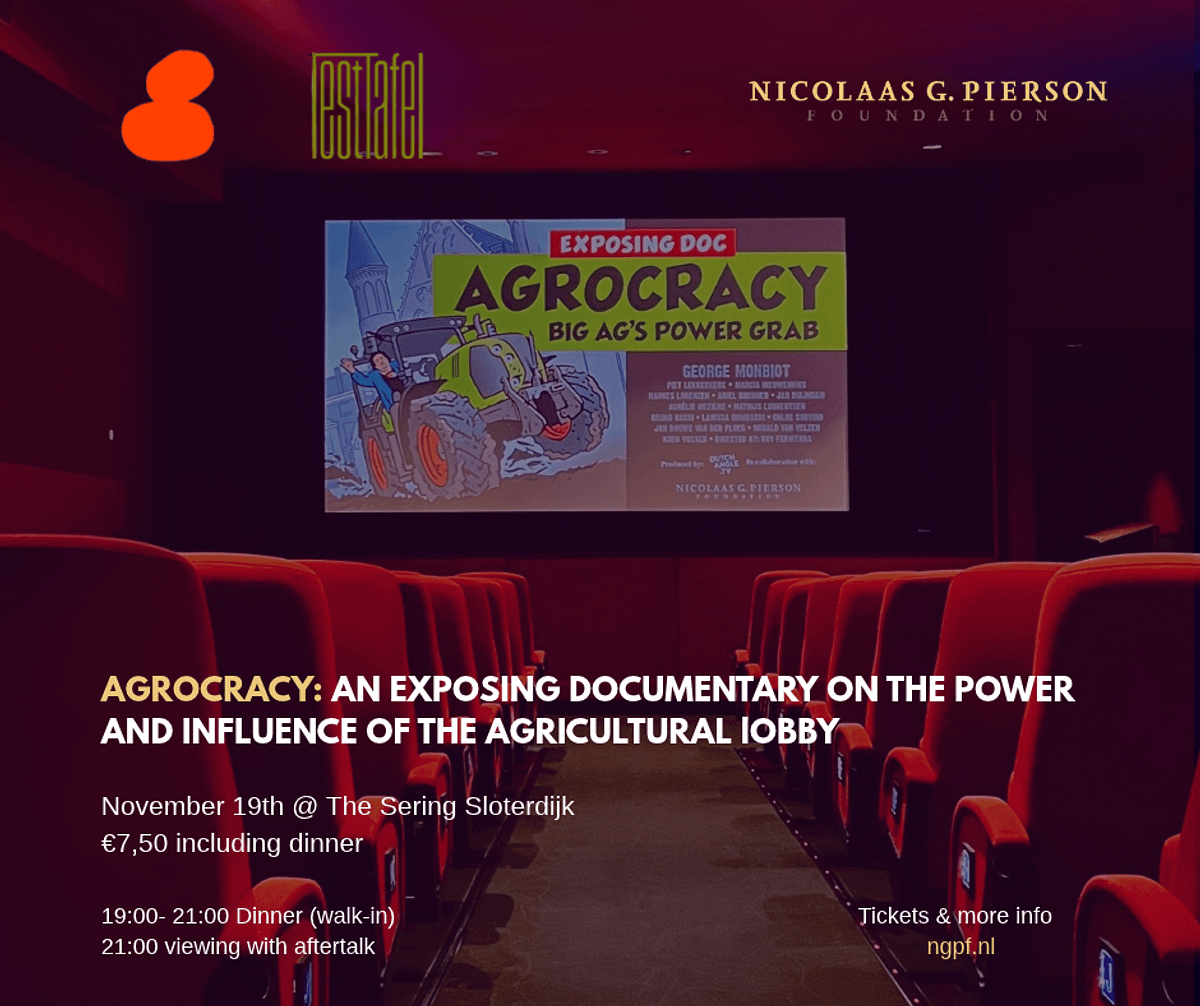
A viewing of the documentary Agrogracy, Big Ag's power grab, a film exposing the hidden powers behind the agricultural lobby and their influence on our food policies.
Buy your tickets here
18:00 - 21:00 Dinner (drop-in)
21:00 - 22:10 documentary
22:10 - 22:30 Aftertalk with the Nicolaas G. Pierson Foundation
Proceeding the movie we'll gather at the Sering for a communal dinner, price included in the ticket. Feel free to drop in any moment from 18:00, the documentary starts at 21:00.
Afterwards, there will be an aftertalk on the future of our food system with the initiators and commissioners of the documentary.

Synopsis
The film 'Agrocracy' explores how international agricultural policy is increasingly influenced by large companies in the agro- and livestock industry. Over the years, these companies have secured powerful positions in parliaments around the world, including in The Hague, Brussels, and Washington. This documentary investigates its dealings, which are mostly hidden from the public eye.
The documentary starts out with footage of violent farmers’ protests; tractors blocking roads, blockades of community halls, and the rise of the farmer-citizen movement in the Netherlands, called the BBB. It soon becomes clear, however, that there is more to these protests than solely angry farmers. The filmmakers investigate the people and organizations operating behind the scenes, who shape the national debate on agricultural practices and its environmental impacts.
Through interviews with experts, journalists and insiders, the documentary shows how lobbyists, PR agencies, and major agriculture companies help shape policies through marketing campaigns and lobbying activities. It reveals how they gain access to ministries and influence political parties, and mislead the public. Step by step, a picture emerges of a system, where economic interests often outweigh democratic considerations.
The viewer is taken along on a journey that is, at times, enlightening and, at other times, confronting. Questions arise, among which; how spontaneous were the farmers’ protests, really? Who came up with the narrative that framed farmers as ‘wronged people’, and who pushed for the tractor protests? Why do parties claiming to back the farmers work closely together with companies that act against the farmers’ best interests?
‘Agrocracy’ does not assign blame to one single person or entity, but instead highlights how complex and interconnected this conflict over agricultural interests is. The result is an engaging and captivating story that raises an important question: when it comes to international agricultural policy, who pulls the strings? Lawmakers and politicians, the farmers, or the agribusiness industry?


